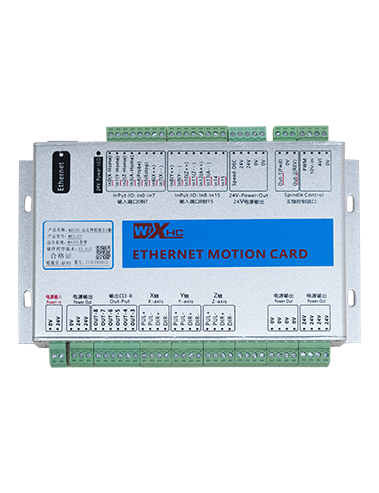
ʻO ka weheweheʻana
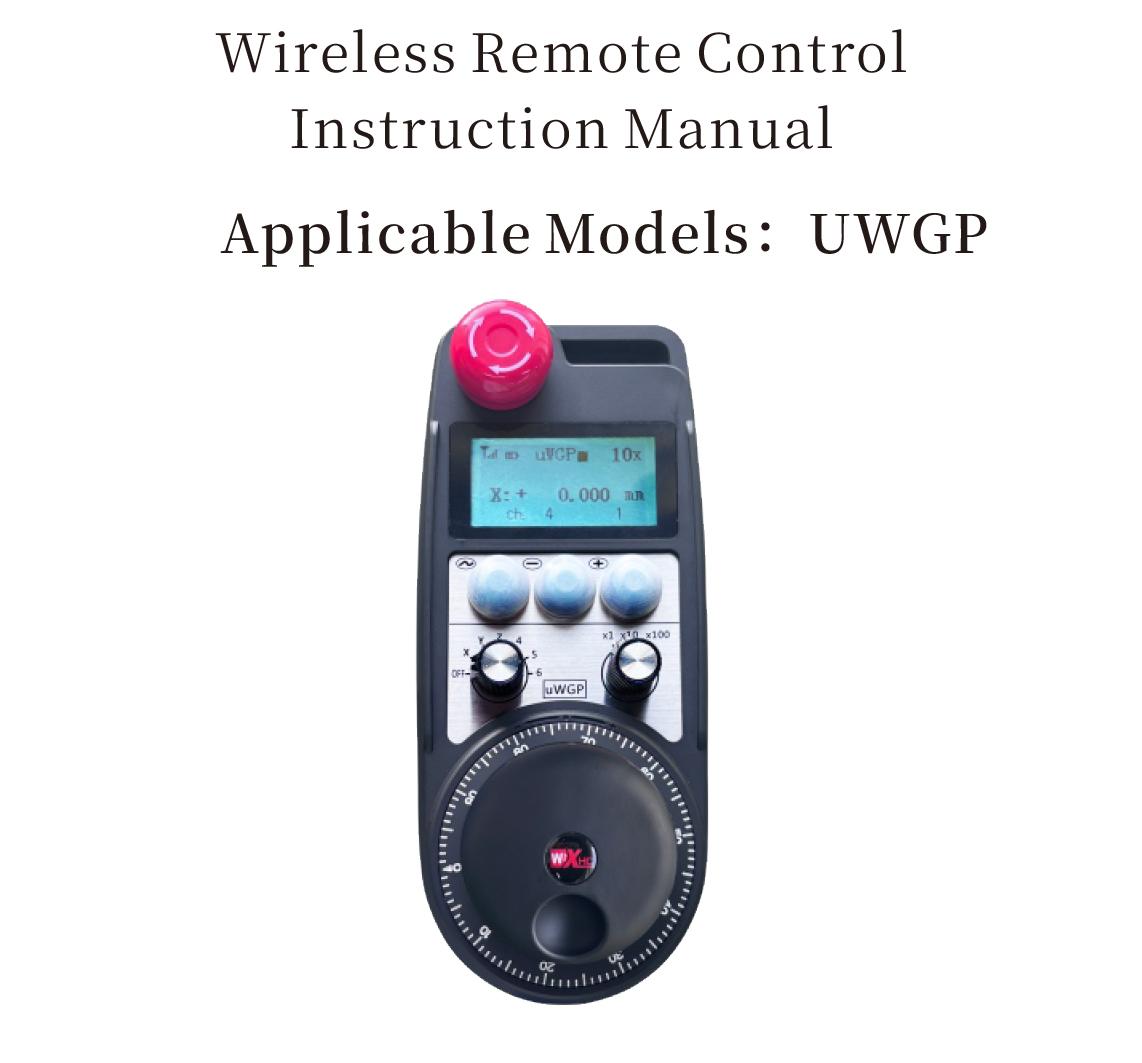
1.Huahana hou hoʻopuka
Wireless Remote Control is used for manual guidance, noho au e kau ana, tool setting and other operations of CNC machine tools. ʻO kēia huahana ADOPTS Pūnaewele Pūnaewele Pūnaewele, Hoʻokuʻu i ka piliʻana o ka uila uila, ʻO ka hoʻemiʻana i nā lako hana i hikiʻole e nā kaula, Hoʻokuʻu i nā hemahema o nā hemahema o ke kāpiliʻana, NāʻAi'ailae Kāleʻa, etc., and is more convenient to operate.It is widely applicable to CNC machine tools such as gantry machining centers, gantry vertical lathes, and CNC gear processing machines, and is compatible with various mainstream CNC system brands on the market, including Siemens, Mitsubishi, Kūʻai, Syntec and more.
2.Nā hiʻohiʻona huahana
1. Hoʻohana i ka ʻenehana kamaʻilio uea 433MHz me kahi mamao hana uea o 20 Nā Moʻi.
2.Ka lele alapine hoʻololi; 32 Hiki ke hoʻohana ʻia nā pūʻulu o nā mana mamao ʻole i ka manawa like me ke keakea ʻole.
3.Supports the emergency stop button, and the emergency stop button remains effective even after the remote control is powered off.
4.Kākoʻo 3 nā pihi maʻamau me ka hoʻololi ʻana i ka puka hōʻailona IO.
5.Kākoʻo i ka mana 6-axis, a 7 i ka mana 12-axis hiki ke hana.
6. Kākoʻo i ka mana hoʻonui 3-wikiwiki, a me 4-wikiwiki mana hoʻonui i customizable.
7.kākoʻo i ka hana pihi hiki, hiki ke hoʻopuka i nā hōʻailona IO hoʻololi, a e hoʻomalu pū i ke koho axis, ka hoonui a me ka encoder.
8.Kākoʻo i ka hoʻololi ʻana i ke ʻano hoʻopaʻa ʻana o ke koho axis a me ka hoʻonui ʻana ma o ka lako polokalamu.
9. Supports pulse encoder with specification of 100 nā puʻupuʻu no ka hoʻololi.
10. Supports standard Type-C charging with 5V-2A charging specification; built-in battery
specification: 14500 / 1100Mah.
| Working Voltage and Current of Handheld Terminal |
3.7V/20.0mA |
| Charging Battery Specification |
3.7V/14500/1100mAh
|
| Low Voltage Alarm Range of Handheld Terminal |
<3.35V |
| Receiver Power Supply Voltage |
DC5V-24V/1A |
| Receiver Emergency Stop Output Load Range |
AC125V-1A/DC30V-2A |
| Receiver Enable Output Load Range |
AC125V-1A/DC30V-2A |
| Receiver Custom Button Output Load Range |
DC24V/50mA
|
| Receiver Axis Selection Output Load Range |
DC24V/50mA |
| Receiver magnification Output Load Range |
DC24V/50mA |
| Handheld Terminal Transmit Power |
15dBm
|
| Loaʻa ka ʻike ʻike |
-100dBm |
| ʻO ke alapine kamaʻilio ʻole |
433MHz alapine
|
| Wireless Communication Distance |
20 meters barrier-free distance
|
| Operating Temperature |
-25℃<X<55℃ |
| Safe drop height |
1 m
|
| Number of Custom Buttons |
3
|
| Product Weight |
546.86(g) |
| Product Dimensions |
200*87*72(mm) |
4. Hōʻikeʻia ka hana huahana
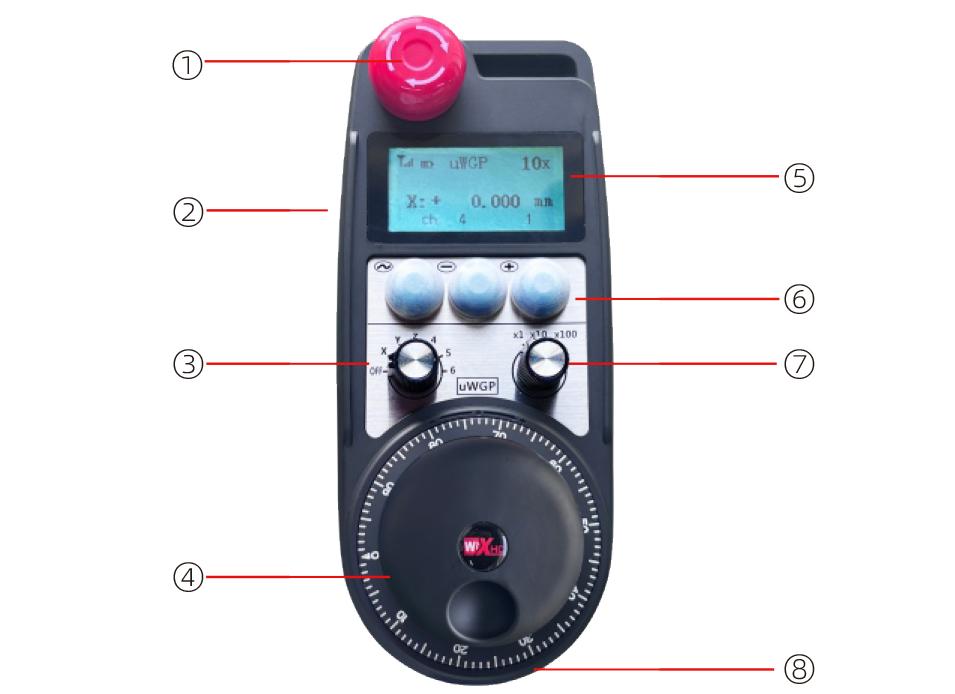
Nā moʻolelo:
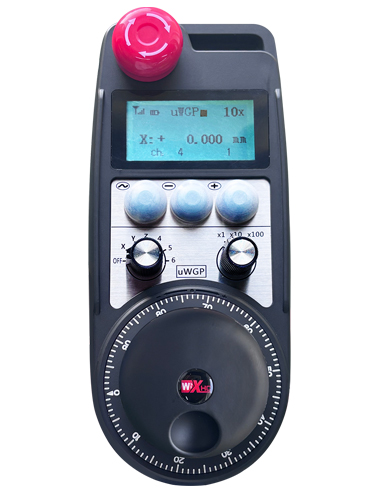
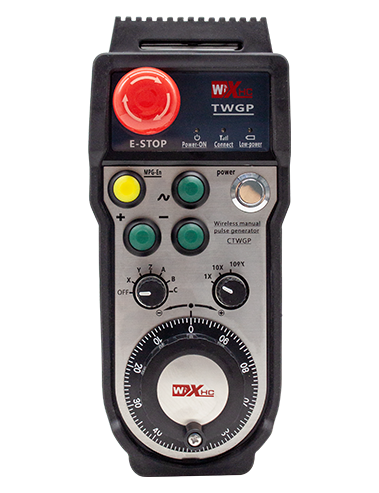
① Emergency Stop Button:
E kaomi i ke pihi STOCK FORT, the two groups of emergency stop IO outputs on the receiver will disconnect, and all remote control functions will be invalidated.Release the emergency stop button, the emergency stop IO outputs on the receiver will be closed, and all remote control functions will be restored. Kahi mea hou aʻe, even if the remote control is powered off, pressing the emergency stop button can still activate the emergency stop IO output of the receiver.
② Enable Button:
Press either enable button on both sides, the two sets of enable IO outputs on the receiver will conduct. Release the enable button, and the enable IO outputs will disconnect. It is necessary to press and hold the enable button before toggling axis selection, magnification or rotating the remote control for the operation to take effect.This function can be canceled through the configuration software.
③ Axis Selection Switch (Power Switch):
E kaomi a hoʻopaʻa i ka pihi e hiki ai, then toggling the axis selection switch can control the movement of axis .Press and hold the enable button, then toggle the axis selection switch to switch the motion axis controlled by the remote control. Toggle the switch from the OFF position to any axis position, and the remote control will power on automatically.
④ Pulse Encoder:
Press and hold the enable button and rotate the pulse encoder, it will output pulse signals to control the movement of the machine axis.
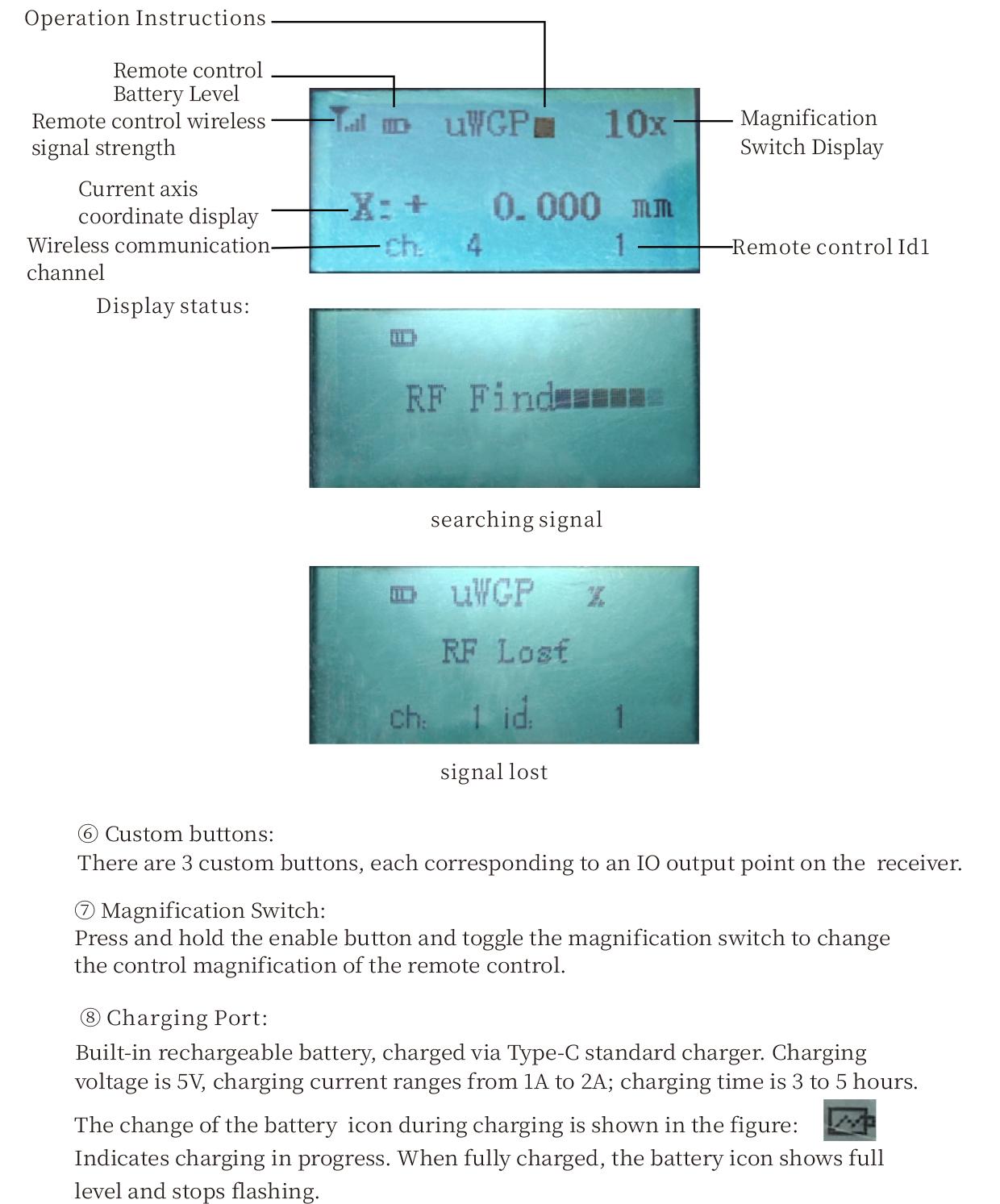
⑤ LCD Display Screen:
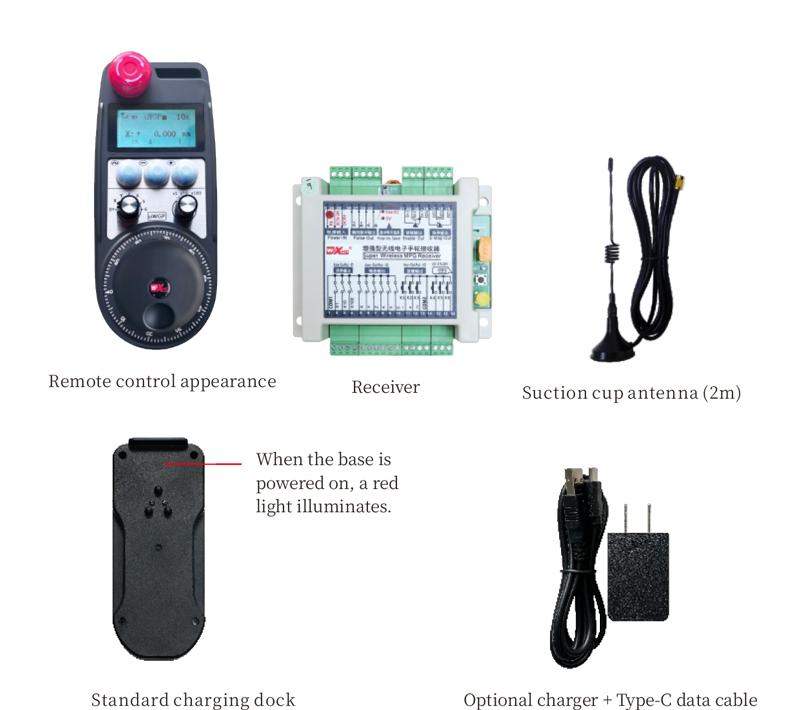
5. Product Accessories Diagram
6. ʻO ke alakaʻi kau inoa huahana
6.1 Nā Kūlana huahana huahana
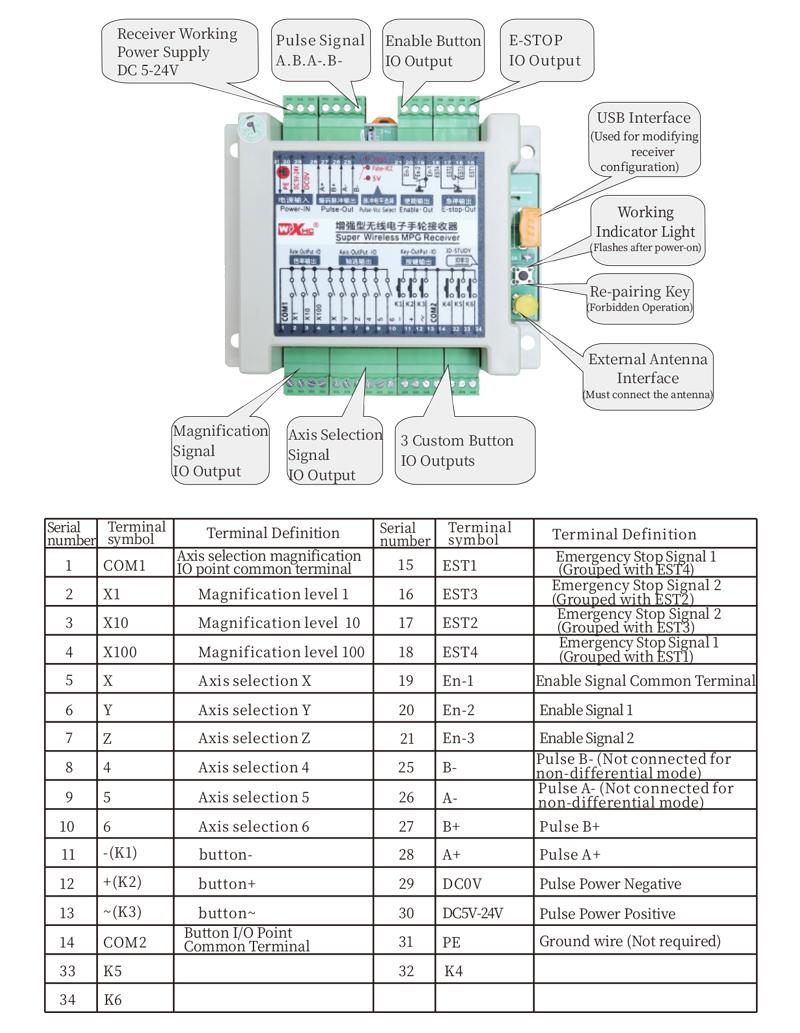
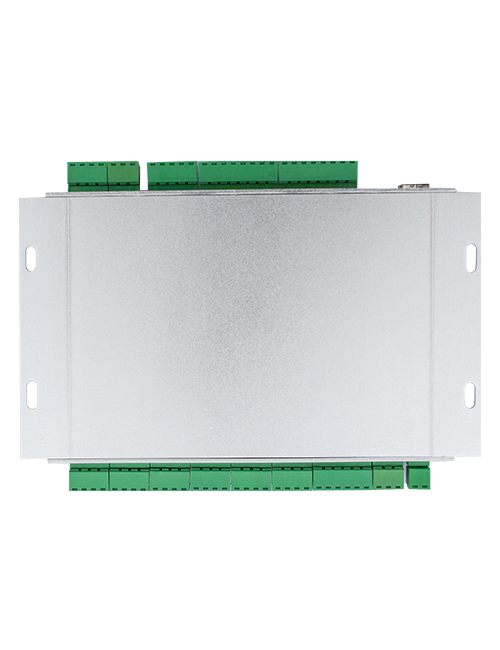
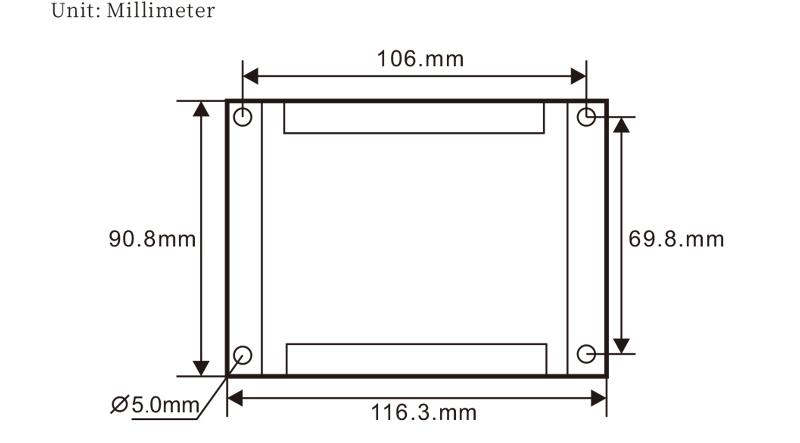
1. Install the receiver in the electrical cabinet via the buckle on its back, or mount it inside the electrical cabinet through the screw holes at the four corners of the receiver.
2. E nānā i kā mākou mea hoʻokipa hoʻokipa, Hoʻohālikelike ia me kāu mau lako pūnaewele, and connect the equipment to the receiver with cables.
3. After the receiver is fixed in place, install the supporting antenna of the receiver properly. Mount or place the outer end of the antenna outside the electrical cabinet. It is recommended to place it on the top of the electrical cabinet for optimal signal performance. Do not leave the antenna uninstalled or place it inside the electrical cabinet; ai ole, signal failure may occur.
4. Hope loa, turn on the remote control power switch, then you can remotely operate the machine via the remote control.
6.2 Receiver Installation Dimensions
6.3 Lawena i nā kiʻi kiʻi kiʻi kiʻi
7. Nā'ōlelo aʻoaʻo huahana
1. Ka mana ma ka mīkini a me ka mea lawe. The receiver operation indicator flashes. After the wireless electronic remote control is fully charged, toggle it from the OFF gear to the X-axis gear, and the remote control display lights up.
2. Select the axis : E kaomi a hoʻopaʻa i ka pihi e hiki ai, toggle the axis selection switch to select the axis to be operated.
3. Select the magnification: E kaomi a hoʻopaʻa i ka pihi e hiki ai, toggle the magnification switch to select the required magnification gear.
4. Axis movement: E kaomi a hoʻopaʻa i ka pihi e hiki ai, select the axis selection switch and the magnification switch, then rotate the pulse encoder. Rotate clockwise to move the axis in the positive direction, and rotate counterclockwise to move the axis in the negative direction.
5. E kaomi a hoʻopaʻa i kahi pihi maʻamau, the corresponding button IO output of the receiver will turn on; release the button, and the output will turn off.
6. E kaomi i ke pihi STOCK FORT, the corresponding emergency stop IO output of the receiver disconnects and the remote control function becomes invalid. Release the emergency stop button, the emergency stop IO output closes and the remote control function is restored.
7. If the wireless remote control is not operated for a period of time, e komo 'akomi i ke ano hiamoe e hoemi i ka mana. It can be used normally again by pressing the enable button again.
8.If the wireless remote control is not used for a long time, turn the axis switch to OFF to turn off the power and extend battery life
8. ʻO ka wehewehe hoʻohālike huahana
①:UWGP stands for appearance style.
②:Pulse Output Parameters:
01: E hōʻike ana ʻo ka hōʻailona puka pulse ʻo A, B; Pulima blotoge 5v; ka nui pulse 100PPR.
02: E hōʻike ana ʻo ka hōʻailona puka pulse ʻo A, B; Pulse Volta 12V; pulse quantity 25PPR.
03: E hōʻike ana ʻo ka hōʻailona puka pulse ʻo A, B, A -, B -; Pulima blotoge 5v; ka nui pulse 100PPR.
04: Hōʻike i kahi kikowaena haʻahaʻa haʻahaʻa haʻahaʻa haʻahaʻa, me nā hōʻailona pulse i nā hōʻailona o A a me B; The number of pulses is 100PPR.
05: E hōʻike ana i nā kūlana kumu PNP kiʻekiʻe kiʻekiʻe, me nā hōʻailona pulse i nā hōʻailona o A a me B; ʻO ka helu o nā pulses he 100PPR.
③:Represents the axis selection switch quantity; 6 stands for 6 nā koi, 7 stands for 7 nā koi, and so on.
④: Represents the signal type of the axis selection switch.A stands for point-to-point output signal, and B stands for encoder output signal.
⑤: Represents the signal type of the magnification switch.A stands for point-to-point output signal, and B stands for encoder output signal.
⑥: Hōʻike i ka helu o nā pihi maʻamau; 3 corresponds to 6 nā pihi maʻamau.
⑦: Represents the power supply for the system remote control. 05 stands for 5V power supply, a 24 stands for 24V power supply.
⑧: Represents the contact charging mode. It starts charging automatically when placed back on the charging base.
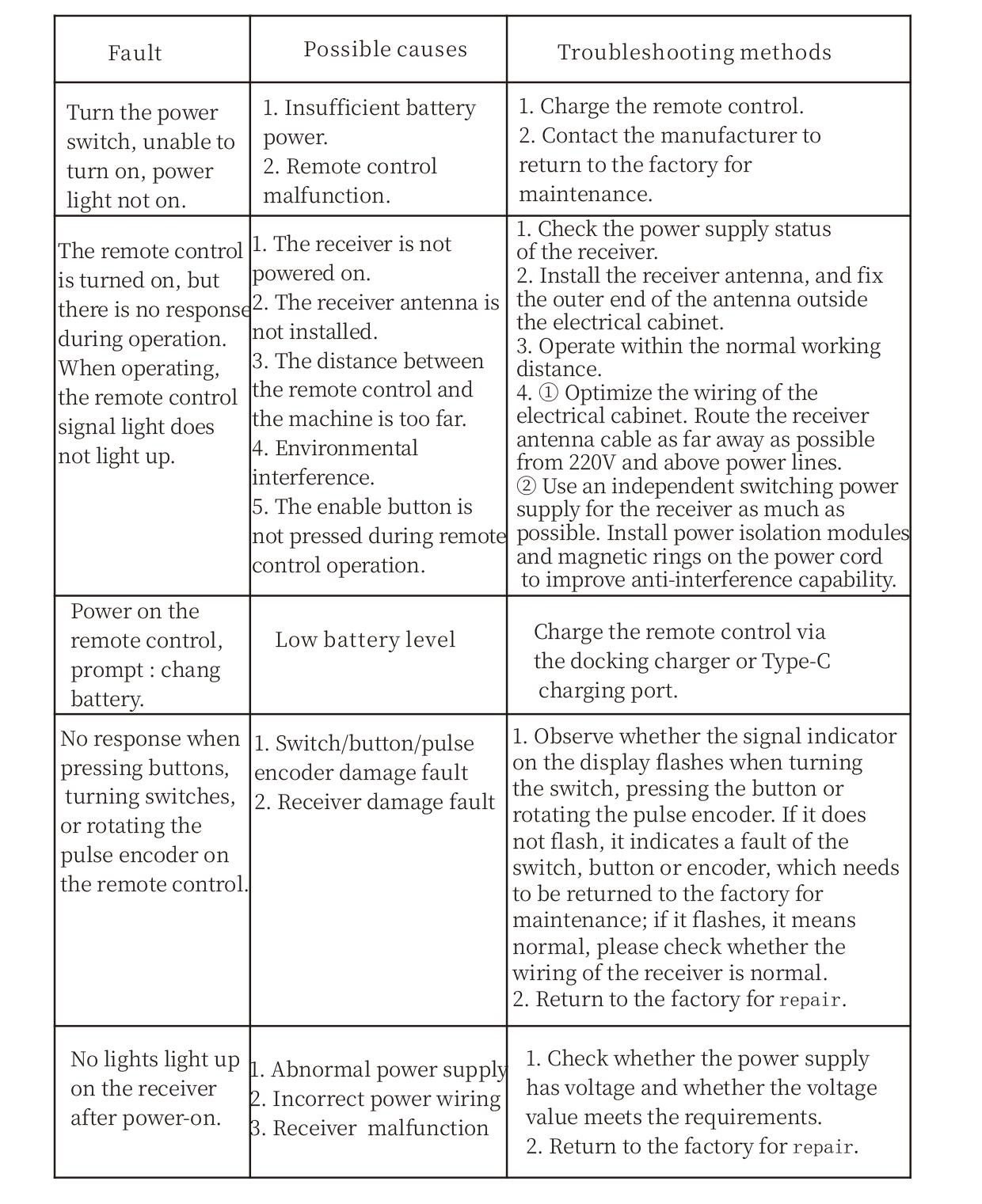
9. Huahana huahana
10. Maintenance and upkeep
1. Eʻoluʻolu e hoʻohana iā ia ma kahi wahi maloʻo ma ka mahana o ka lumi a me ke kaomi e hoʻonui i kona ola lawelawe.
2. Please avoid using in abnormal environments such as rain and water to extend the service life.
3. Please keep the appearance of the remote control clean to extend its service life.
4. Please avoid crushing, dropping, or bumping, etc. to prevent damage to the precision components inside the remote control or accuracy errors.
5. Ināʻaʻole i hoʻohanaʻia no kahi manawa lōʻihi, please store the remote control in a clean and safe place.
6. Avoid moisture and shock during storage and transportation.
11. Nāʻike palekana palekana
1. Eʻoluʻolu e heluhelu pono i nā'ōlelo aʻo ma mua o ka hoʻohanaʻana a pāpā i nāʻoihana no nāʻoihanaʻole mai ka hana.
2. Please charge the remote control in a timely manner when the battery level is too low, to avoid malfunction and operational errors caused by insufficient power.
3. If you repair it yourself and cause damage, the warranty will be void.